 Voltage Drop Calculator
Voltage Drop Formulas & Theory
Understanding the mathematics behind voltage drop is crucial for designing safe and efficient electrical systems. Below are the standard voltage drop calculations and formulas used by electricians and engineers.
The Basic Formulas
How to Calculate Voltage Drop Across a Resistor
For simple circuits or when dealing with specific components, you might need to know how to calculate voltage drop across a resistor. This is governed by the fundamental principle of Ohm's Law.
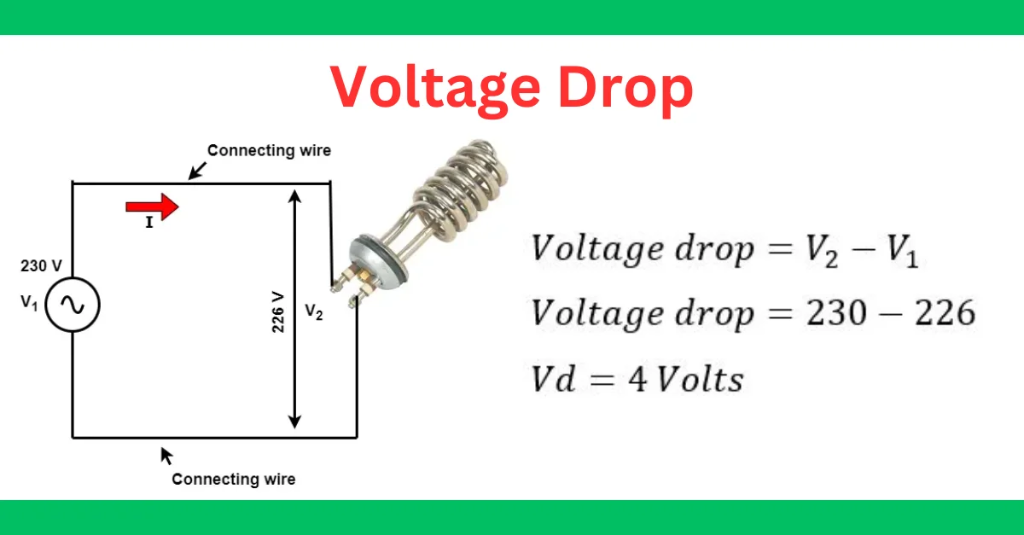
Figure 1: Visualizing voltage drop across a load in a simple circuit.
To perform voltage drop calculations for a resistor:
- Measure the Current (I): Determine how much current is flowing through the component.
- Know the Resistance (R): Find the resistance value of the resistor.
- Multiply: Multiply the current by the resistance to find the voltage drop.
Scenario 1: A Series Circuit (Most Common)
In a series circuit, components are lined up one after another. The current (I) is the same through every component, but the voltage splits between them.
Step 1: Find the Total Resistance (Rtotal)
Add up the values of all resistors in the series circuit.
Step 2: Find the Total Current (Itotal)
Divide the source voltage (Vsource) by the total resistance.
Step 3: Calculate the Voltage Drop
Now that you know the current flowing through the circuit (which is the same for all resistors), apply Ohm's law to the specific resistor you are measuring.
Example Calculation (Series)
Imagine a 12V battery connected to two resistors in series: Resistor A (100Ω) and Resistor B (300Ω). You want to find the voltage drop across Resistor A.
- 1. Find Total Resistance: 100Ω + 300Ω = 400Ω
- 2. Find Current: 12V / 400Ω = 0.03A (30mA)
- 3. Find Voltage Drop (Resistor A): 0.03A × 100Ω = 3V
Note: If you calculated for Resistor B, it would be 0.03 × 300 = 9V. (3V + 9V = 12V, matching the source).
Scenario 2: The Voltage Divider Rule (Shortcut)
If you have a series circuit and don't want to calculate the current first, you can use the Voltage Divider Formula.
Using the example above:
Scenario 3: A Parallel Circuit
In a simple parallel circuit (where each resistor is connected directly to the power source), the calculation is much simpler.
The voltage drop across a single resistor in parallel is equal to the source voltage.
If you have a 12V battery and three resistors in parallel, the voltage drop across each resistor is 12V. (However, the current splits differently among them).
Why is Voltage Drop Important?
Excessive voltage drop can cause a variety of problems in electrical systems:
- Equipment Failure: Motors may run hot or fail to start. Lights may flicker or be dim.
- Inefficiency: Energy is lost as heat in the wires, increasing utility bills without doing useful work.
- Fire Hazard: In extreme cases, the heat generated by resistance can damage insulation and cause fires.
NEC Recommendations
The National Electrical Code (NEC) suggests the following limits for efficiency: